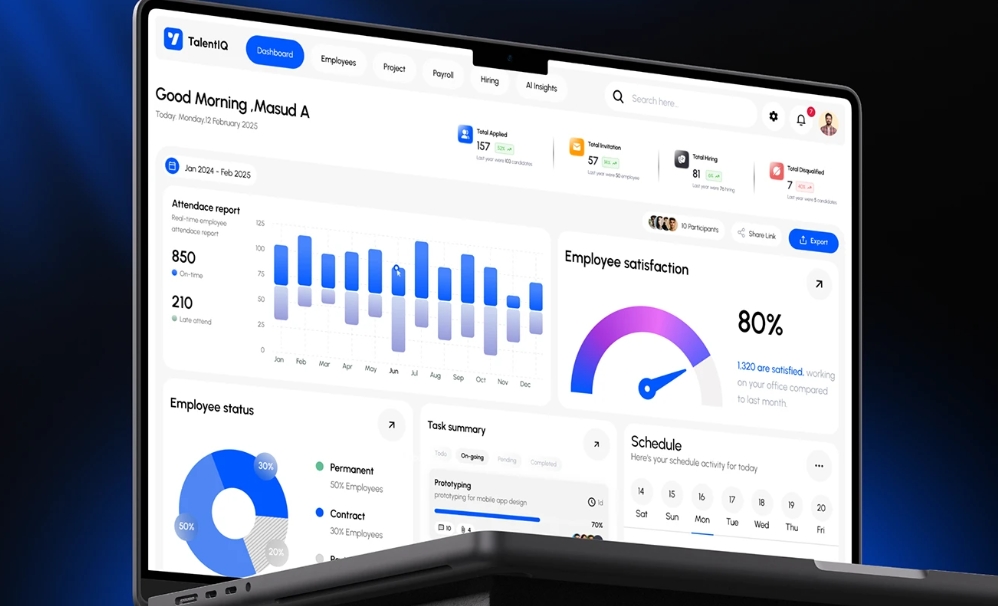
Nigerian enterprises are scaling faster than their manual processes can handle. Spreadsheets break at 50 employees. Email approvals fail at 100 transactions per day. Modern ERP systems solve these problems by unifying every department — finance, HR, inventory, procurement, and sales — into a single, real-time platform.
💡
Key takeaway: For Nigerian SMEs (50–500 employees), Odoo is the most cost-effective and flexible ERP. It supports local tax configurations, payroll, and can be deployed on Nigerian cloud infrastructure. Start with 3–4 core modules and expand as the business grows.
What Modern ERP Does for Nigerian Businesses
- Real-time inventory visibility — Know exactly what stock you have across all locations at any moment
- Automated financial reporting — P&L, balance sheet, and cash flow reports generated automatically — no manual Excel consolidation
- HR and payroll automation — Nigerian payroll with PAYE, pension (PFA), and NHF deductions handled automatically
- Procurement workflow — Purchase orders, supplier invoices, and payment approvals with audit trails
- Sales and CRM integration — Track leads, quotes, orders, and invoices in one system
6 Phases of a Successful ERP Implementation in Nigeria
01
Needs Assessment
Map all current business processes, identify bottlenecks, and define what the ERP must solve — before evaluating vendors.
02
Platform Selection
Odoo for flexibility, SAP for enterprise compliance, Microsoft Dynamics for Office integration, or custom for unique workflows.
03
Data Migration
Clean, transform, and validate historical data before importing. Data quality is the #1 cause of ERP project failure.
04
Customisation
Adapt the ERP to Nigerian tax rates, FIRS requirements, local payroll rules, and your specific industry workflows.
05
Staff Training
Train by role, not by module. Super-users in each department must own the system for successful adoption.
06
Go-Live & Support
Phase rollout by department. Keep legacy systems running in parallel for 30 to 60 days. Monitor KPIs weekly.
Top ERP Platforms Used in Nigeria 2025
- Odoo — Open source, highly customisable, Nigerian localisations available. Most popular for SMEs
- SAP Business One — German-engineered reliability for mid-to-large Nigerian corporations
- Microsoft Dynamics 365 — Excellent for businesses already in the Microsoft ecosystem
- Oracle NetSuite — Cloud-first ERP popular with Nigerian subsidiaries of multinationals
- Custom-built ERP — Ideal for manufacturing, agriculture, and logistics businesses with unique workflows